
How Technology Is Driving Innovation in Smart Manufacturing
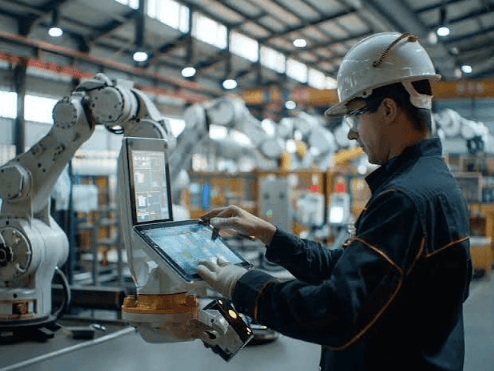
Technology weaves sensors, connectivity, analytics, AI, and edge compute into a cohesive stack. Real-time data visibility enables proactive governance and scalable experimentation across value chains. Data governance, lineage, and security underpin trustworthy insights, while digital twins and edge AI push rapid on-site decisions. Predictive analytics preempt failures and optimize throughput, accelerating value realization. The result is a resilient, collaborative ecosystem poised for continuous improvement—yet the next phase hinges on how organizations harmonize governance with autonomous decision-making.
What Tech Powers Smart Manufacturing and Why It Matters
Smart manufacturing rests on an integrated stack of technologies that collectively optimize production, quality, and agility: sensors and connectivity, data analytics and AI, edge computing, and automation. The chosen tech enables proactive governance, resilience, and scalable innovation. It fosters sustainability metrics and strengthens cybersecurity posture, aligning global standards with strategic risk management while enabling freedom-driven experimentation, collaboration, and continuous improvement across complex value chains.
Real-Time Data and Analytics Driving Operational Excellence
Real-time data and analytics empower operations to move from reactive responses to proactive optimization. In this framework, data governance structures ensure quality, security, and compliance across systems, while data lineage clarifies origin and transformations, enabling auditable decision paths. The result is scalable visibility, enabling strategic bets, continuous improvement, and empowered teams pursuing freedom through disciplined insight and accountable performance.
AI, IoT, and Automation: Turning Data Into Predictive Breakthroughs
AI, IoT, and automation converge to convert streams of data into actionable foresight, enabling predictive breakthroughs that preempt failures, optimize throughput, and reduce downtime.
In this framework, edge AI enables on-site inference for rapid decisions, while digital twins simulate operations to stress-test scenarios.
The result is strategic resilience, data-driven autonomy, and a liberated enterprise pursuing continuous, intelligent optimization without centralized bottlenecks.
Reshaping Value Chains: Design to Delivery at Speed and Scale
Reshaping value chains requires syncing design decisions with delivery capabilities at unprecedented speed and scale.
The approach aligns product ideation with production cadence, enabling design speed to outpace disruption.
This framework builds scale resilience through modular architectures, autonomous decisionmaking, and end-to-end visibility.
With autonomy visibility, stakeholders anticipate demand, reallocate resources, and sustain performance while accelerating time-to-value across the supply network.
Frequently Asked Questions
How Do Small Manufacturers Securely Adopt Smart Tech at Scale?
A thoughtful approach enables small manufacturers to securely adopt smart tech at scale through secure onboarding and scalable governance, ensuring risk-aware, autonomous ecosystems that empower growth while preserving freedom, resilience, and long-term competitive advantage across diverse operations.
What Is the ROI Timeline for Smart Manufacturing Investments?
ROI timelines for smart manufacturing typically show payback periods ranging from 12 to 36 months, depending on scope, scale, and integration depth; strategic deployments can compress this horizon through standardized platforms, modular investments, and continuous improvement mindsets.
How Is Workforce Reskilling Handled Alongside Automation?
Reskilling pathways balance automation with human judgment; talent adaptability emerges as the differentiator. The juxtaposition of machine precision and flexible learning shapes strategic journeys, enabling workforce progression while operations scale, empowering freedom-seeking teams through proactive, visionary development.
See also: Smart Tech Framework 2104604858 Performance
Which Metrics Best Measure End-To-End Digital Twin Effectiveness?
End to end metrics best measure end-to-end digital twin effectiveness, capturing data integrity, latency, predictive accuracy, and impact on throughput. A visionary, strategic approach evaluates interoperability, decision speed, and value realization, aligning digital twin programs with freedom-driven operational excellence.
How Do Regulatory and Privacy Concerns Impact Data Sharing?
A satirical cartoon depicts data flying freely until consent chains lock it, illustrating how regulatory and privacy concerns impede data sharing. Data ownership and consent management shape strategic architecture, balancing freedom with risk, governance, and responsible innovation.
Conclusion
Smart manufacturing stands at the hinge of data fidelity and decisive action, where every sensor spark and edge compute cycle translates into strategic advantage. A striking stat helps illuminate the path: manufacturers leveraging real-time analytics report up to a 20-30% reduction in downtime and 10-15% throughput gains within months. From design to delivery, the converged stack enables proactive governance, rapid experimentation, and resilient value chains, turning insights into competitive differentiation and sustained operational excellence. The future favors those who orchestrate this digital cadence.